Made That!
Role: Branding, Design System, Product Design
Team: Engineering team and Founder (Athena Kan) at Dreambound
Live Site (Currently in development, tweaking UI and interactions)
Learning AI tools and techniques has become essential, but the current landscape is fragmented and intimidating. Existing platforms like LinkedIn, Twitter, Discord, and Reddit offer only partial solutions—they might be timely but not beginner-friendly, or relevant but not structured for learning.
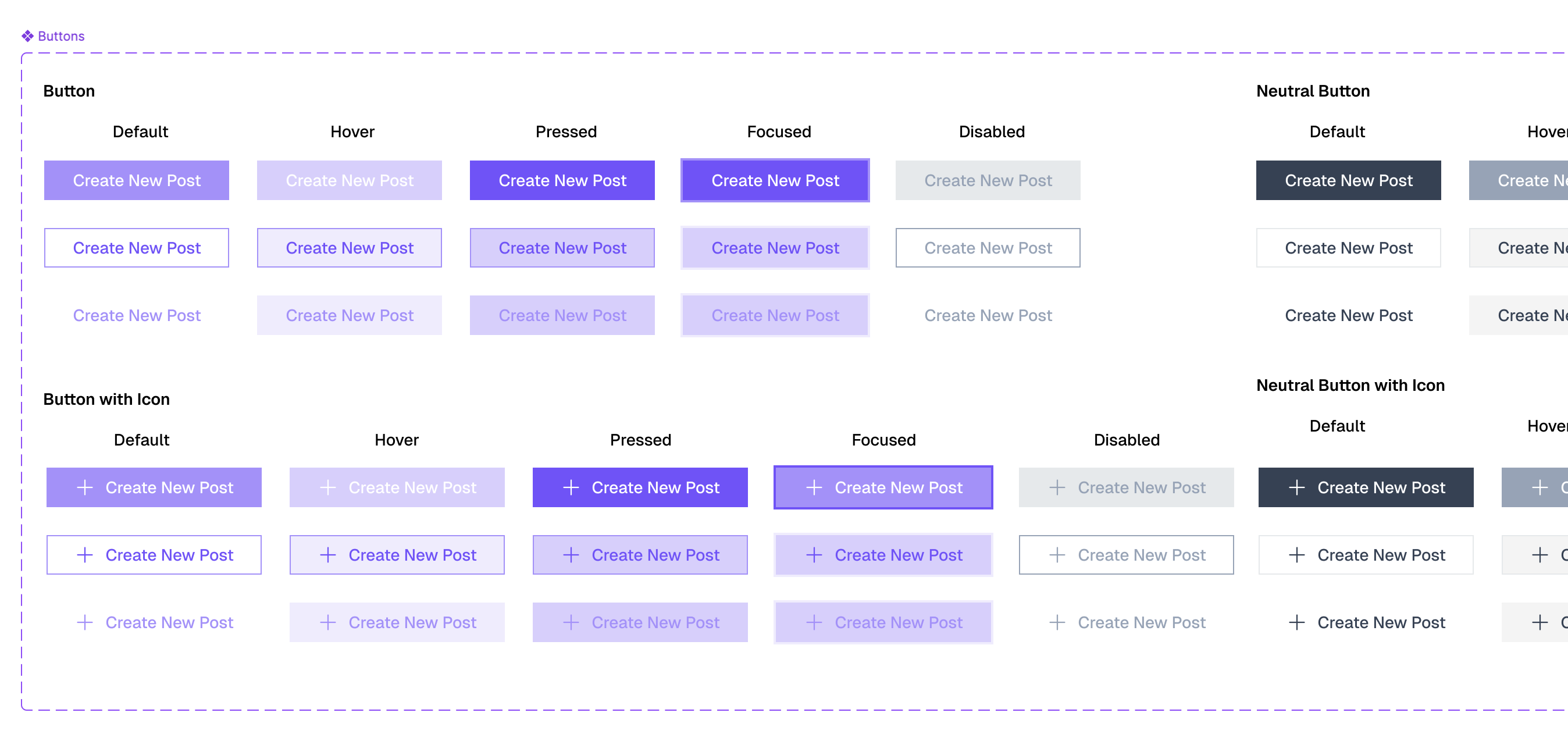
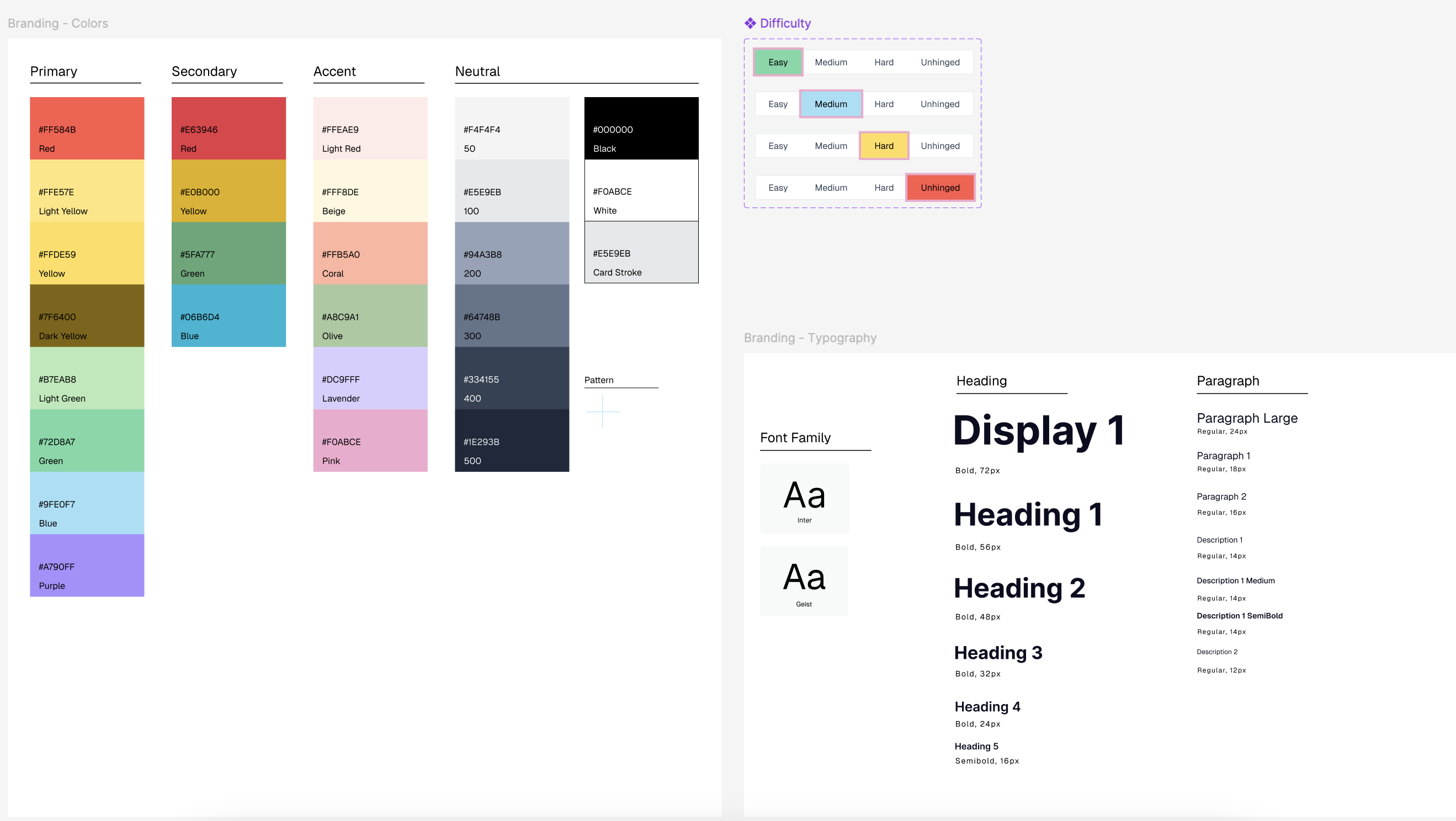
Design System & UX
I created a straightforward, familiar design language inspired by platforms like LinkedIn and Facebook to reduce friction for new users. Inspiration was drawn from other gamified platforms such as the New York Times minigames and other bingo-style games.
While primarily designed for desktop web, I ensured mobile web compatibility for specific use cases. Some challenges are intentionally mobile-only, while others are labeled as requiring desktop for more complex workflows. Responsive grid layouts adapt to different screen sizes while maintaining the bingo board's visual impact.
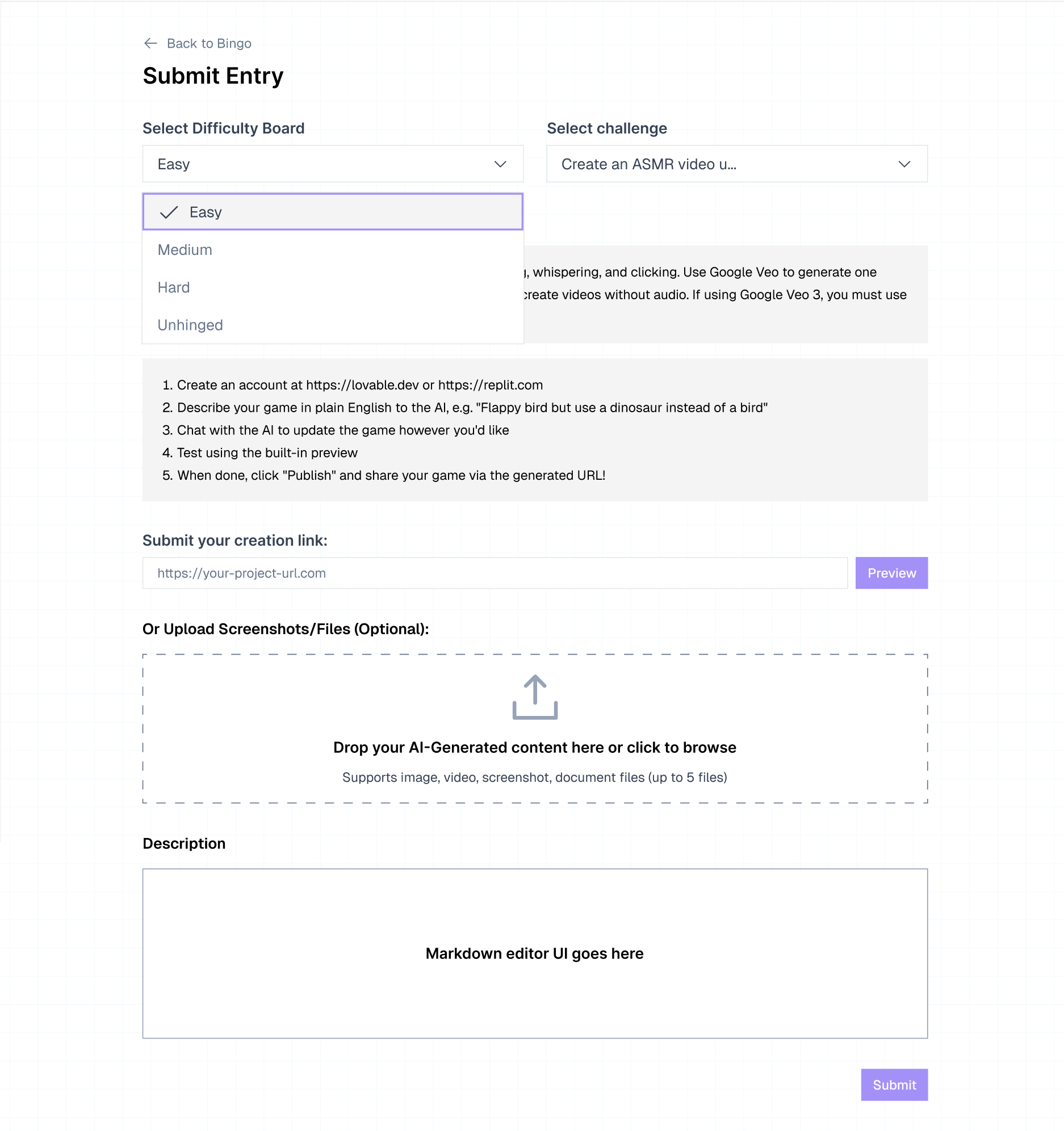
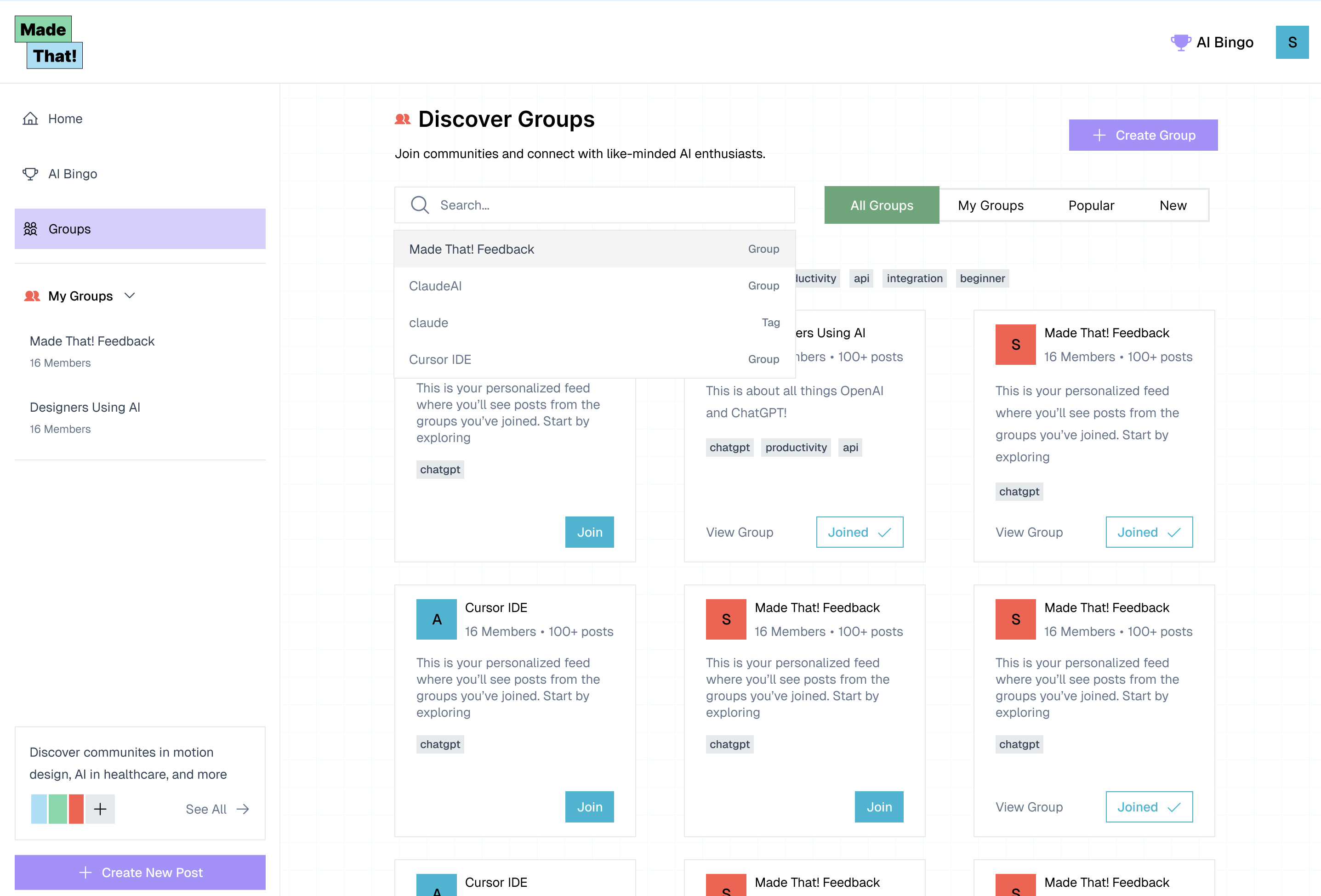
Information Architecture
One of the primary challenges was balancing accessibility with depth. Several of the challenges involve basic knowledge of navigating AI tools, APIs, and sharing functionality. I structured the experience to support multiple user journeys: for explorers, the bingo board is publicly visible with no auth gate, showcasing real-time activity indicators.
Gamification Strategy
Safisfaction of bingo square completion was top of mind, given the goal was to encourage users to push through a new, difficult skill. Social proof through displaying other users' avatars and completion counts creates urgency and validation. Four difficulty levels allow those newer to AI to start with easier challenges and gradually increase complexity as they gain confidence.